
A HOME BEGINS LONG BEFORE THE FINISHES
Why do some of the most important interior design decisions happen before decorating begins?
One of the questions I am asked most often is, “When in the process should I hire an interior designer?”
My answer is usually simple:
“Around the same time you hire an architect.”
For a new home or significant renovation, bringing an interior designer into the conversation early allows the architecture and interiors to develop together—before decisions become permanent, expensive to change, or limiting to the way the home will eventually be furnished and lived in.
Working on a recent residential project abroad has brought this into even sharper focus for me. When distance, local construction practices, climate, engineering, materials, and multiple disciplines are involved, clarity in the early stages becomes especially valuable.
It has also reinforced something I believe deeply: some of the most important work in creating a home happens long before the interior is visible.
The Prologue
Most people encounter interior design at the point where they can see it—the stone, lighting, cabinetry, furnishings, fabrics, and art.
But by then, many of the decisions that determine whether a home will truly work have already been made.
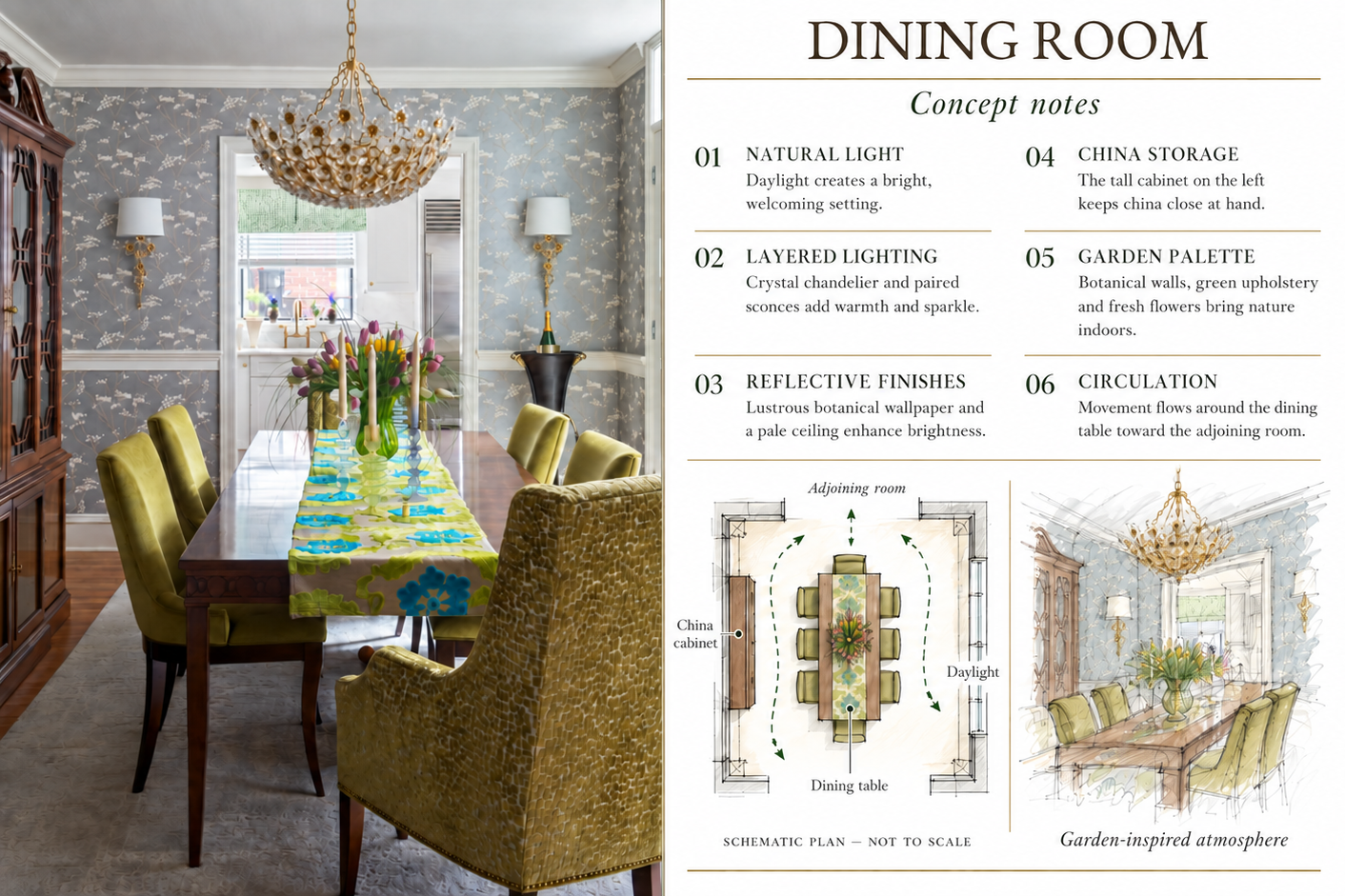
Long before the furniture arrives, an interior designer is imagining how the finished home will actually be lived in.
When I look at an architectural plan, I don't see only walls, windows, and dimensions. I begin imagining life within those lines.
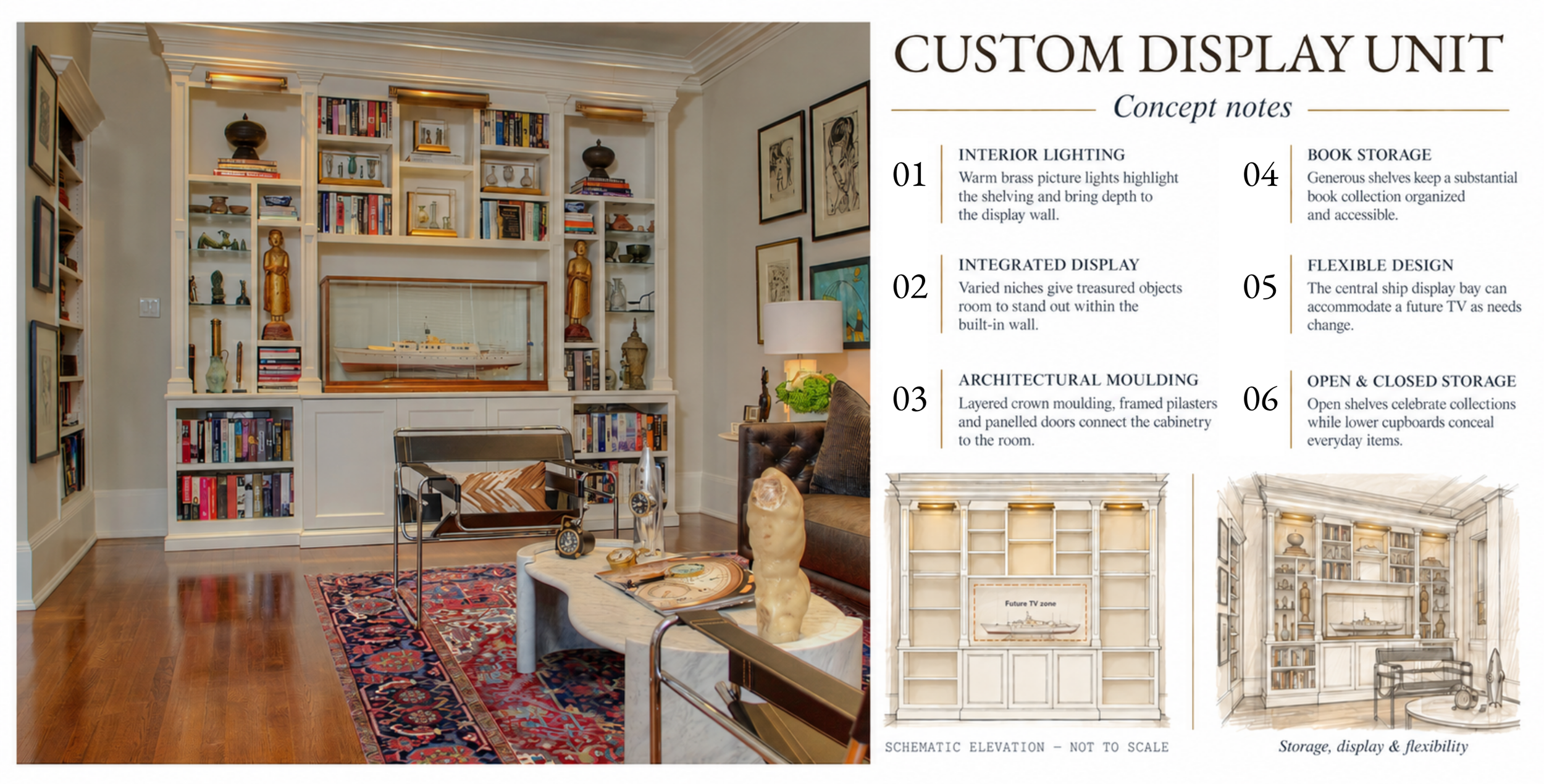
Where will the furniture sit? How will people move through the rooms? What will you see when you enter? Where should lighting and electrical points be located? Is there enough storage—and is it where it will actually be needed? How will cabinetry, door swings, architectural details, and material transitions work together?
Where does the eye naturally travel? Where will artwork eventually live? Does a beautiful window leave enough wall space for the room to function? Can the lighting plan accommodate the furniture arrangement we are beginning to imagine?
These decisions may not always be obvious in the finished home, but they are often what make it feel effortless.
The Process
The strongest projects happen when the architect, interior designer, engineers, builder, and client begin communicating early.
Each sees the project through a different lens. The architect considers the building as a whole. Engineers make it structurally and technically possible. Builders understand how it will be constructed. And the interior designer continually considers how those decisions will ultimately be experienced from within.
The objective isn't for one discipline to replace another. Quite the opposite. It is to make each perspective stronger through collaboration. This allows ideas to be coordinated before they become difficult—or expensive—to change.
Drawings, meetings, renderings, revisions, and site visits are not separate from the design process. They are where the design begins to take shape.
Early collaboration doesn't only prevent problems. It creates possibilities. An architectural constraint can inspire an interior detail. A practical requirement can become a beautiful feature. A view can influence the orientation of a room. A furniture plan can reveal that a doorway should shift before construction begins. A conversation about lighting can change how a piece of art will eventually be experienced.
These are the moments when a house begins moving beyond a collection of rooms and toward something much more personal.
Rooted in the Landscape
Working on a residential project in Colombia has made these ideas particularly tangible.
There are more variables to consider when designing across distance and alongside local teams- requires another level of observation and communication. Climate, topography, engineering, local construction methods, available materials, craftsmanship, and regional building practices all become part of the conversation. And It has reminded me how much thoughtful design depends on asking the right questions early.
How does the home connect to its surroundings? How does natural light move through the spaces? What should be experienced from inside and outside? How can architecture and interiors feel connected to the landscape rather than simply placed within it?
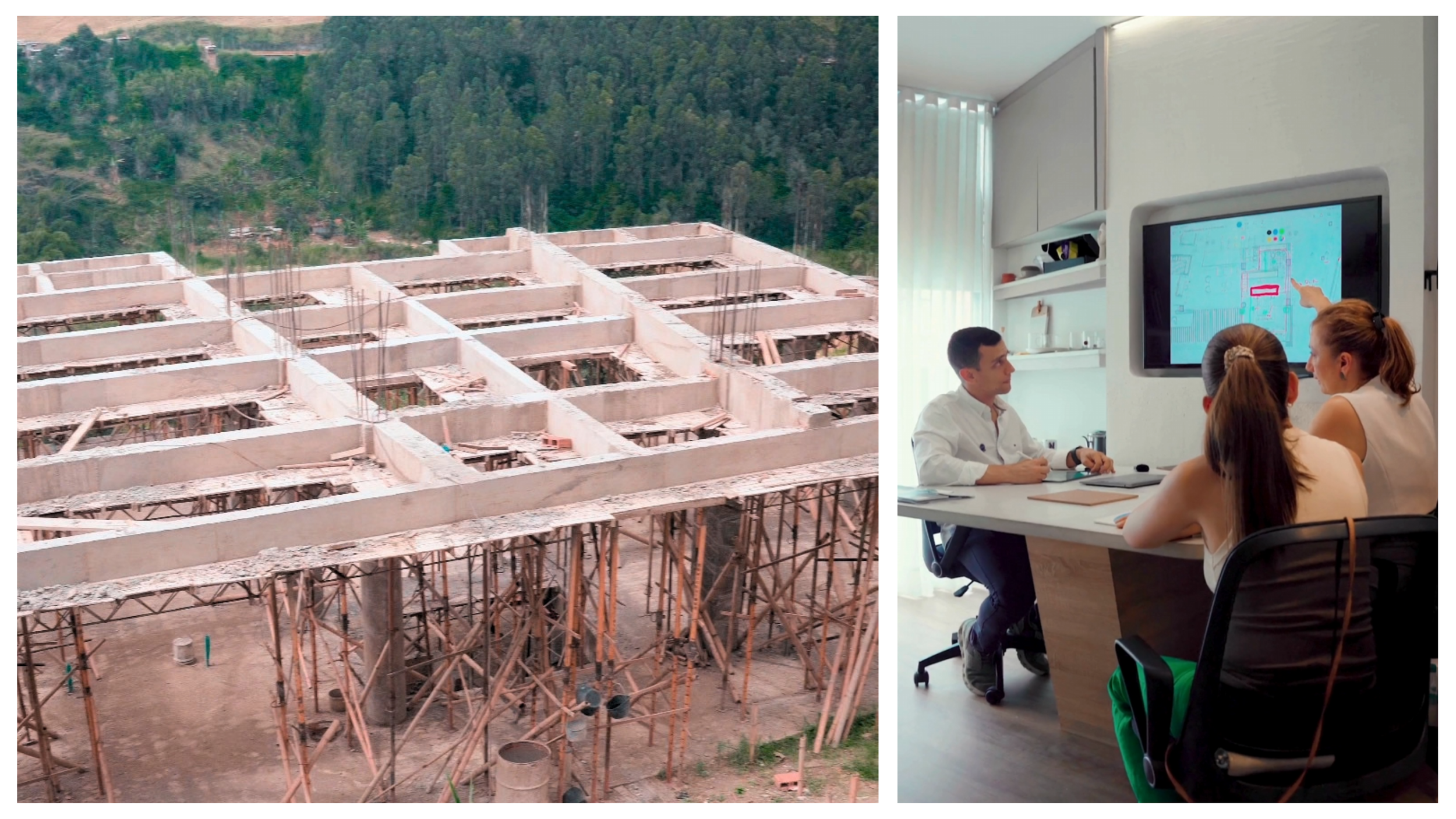
Stella Ludwig Interiors; PAR Architectures
These conversations begin long before the final layers of furnishings and art.
So, When Should You Hire an Interior Designer?
Not when you're ready to choose the furniture.
Ideally, an interior designer should be involved before architectural decisions are finalized, particularly when building a new home or undertaking a significant renovation.
Early involvement creates more possibilities. It allows the interior to be considered alongside the architecture rather than fitted into it afterward.
A home doesn't become personal when the furniture arrives.
It begins becoming personal much earlier—when we start asking not only what it will look like but how it will support the life unfolding within it.
We are a Philadelphia-based interior design studio. At Stella Ludwig Interiors, we design extraordinary homes for busy lives. Our clients value beauty, trust expertise, and seek a seamless experience that allows them to focus on living well while we thoughtfully manage every detail. We draw inspiration from the elegance of historic European architecture, the richness of the natural world, and the enduring influence of fashion design. Guided by intuition, craftsmanship, and a deep understanding of how people live, we create deeply personal homes- spaces that support who our clients are today and the lives they are dreaming of creating. Stella Ludwig Interiors projects and ideas have been featured in Elle Decor, Architectural Digest, Philadelphia Magazine, Philly+Home Design Magazine, Philadelphia Style, Philadelphia & Suburban Life Magazine, Bucks House & Home, and Real Estate and Design Industry Blogs.


